
Markforged Takes to the Skies! Printing a Carbon Fiber Drone – Part 1
There’s more than a few quadcopter and drone enthusiasts at Markforged, which is why we’re excited to share an internal application we’ve been building for the last month. We’re upgrading an IRIS+ quadcopter from 3DRobotics with carbon fiber-reinforced 3D printed components that are both lighter and stronger than the original parts, to see how high we can push the limits of performance. This isn’t the first time Markforged parts have helped a carbon fiber drone fly — the Snotbot research project used Kevlar-reinforced landing gear and one of our engineers printed a racing drone — but we’re excited about this project because this drone is large enough for the carbon fiber-reinforced parts to gain a significant strength advantage over pure plastics. We’re still working on the final design, but we’re going to document the build process with lots of pictures and lessons learned along the way, so expect to see a few more of these build logs in the coming weeks!

A bit of back story — roughly two months ago, in early March 2016, 3DRobotics decided to release open-source STL files of their IRIS+ platform on MyMiniFactory.com (MMF), giving their blessing to anyone with a 3D printer to innovate on the platform. As you can see from by visiting the MMF link, this has led to a proliferation of accessories and performance upgrades in the last two months, including pontoon floats for water landings and mounts for First Person View (FPV) flying.

Around the same time as the IRIS+ announcement, we had been looking for a reliable drone platform with which to leverage high-strength carbon fiber 3D printing enabled by the Mark Two. These days, there are a plethora of phenomenal quadcopters on the market at affordable prices, but many models aren’t designed well for 3D printing. Many models use an injection molded outer casing that also serves as the superstructure of the drone itself — DJI’s Phantom line is probably the best-known example of this. While this type of design has allowed drones to become extremely affordable — injection molded parts are insanely cheap in large volumes — the shell-type structure requires a lot of support material to print (read: 3+ day print times) and it can’t take advantage of the sandwich panel construction that Markforged printers utilize to make parts with extremely high strength-to-weight ratios.

The IRIS+ open source announcement could not have come at a more perfect time, and we’ve been busy test printing parts since. You may have noticed a sneak peek of the carbon fiber-reinforced drone arms in our previous posts on sandwich panel construction or adding threaded inserts to 3D printed parts earlier this month. We’ve now printed prototypes of the arms, a design modified from the stock IRIS+ version by Kirby Downey.
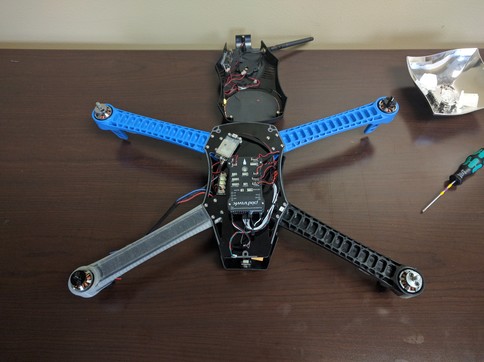
We won’t know how the arms improve flight performance for a couple weeks, but we do have some initial data that suggests the changes will increase the maximum flight duration — a 15% reduction in weight versus the stock drone arm.


We’ve only scratched the surface of what we can do with the Markforged Mark Two and the IRIS+ platform — follow our build progress in the coming weeks and see what’s next!
Want to see what a Markforged printer can do for you? Request a demo today!
すべてのブログおよびブログに含まれる情報の著作権はMarkforged, Inc.に帰属し、当社の書面による許可なく複製、改変、採用することを禁じます。当社のブログには、当社のサービスマークや商標、当社の関連会社の商標が含まれている場合があります。お客様が当社のブログを使用することは、当社の事前の許可なく当社のサービスマークまたは商標を使用する権利またはライセンスを構成するものではありません。当社のブログで提供されるMarkforged情報は、専門的なアドバイスとみなされるべきではありません。当社は、新しい情報、後発事象、その他に基づいてブログを更新または修正する義務を負いません。
Never miss an article
Subscribe to get new Markforged content in your inbox