
Inspection Fixtures — Traditional Machining vs Additive Manufacturing

Traditionally manufacturing inspection fixtures
Inspection is a routine component of the manufacturing process; as parts come off of the production line, some are examined to ensure accurate dimensions. This process requires specialized workholding. Two examples include CMM fixtures and check gauges.
A coordinate-measuring machine (CMM) is a precision tool that probes multiple points on a part to determine if the geometry is within specification. Check gauges are another form of inspection fixture used to quickly and accurately determine if parts are satisfying basic tolerances. If the part fits into the gauge, the part is within specification.
These fixtures need to satisfy stiffness and precision requirements, which traditionally would mean they would be custom-machined out of aluminum. However, the process is expensive and depletes valuable shop time. As the effort increases with the complexity of machined parts, it becomes even more cumbersome to manufacture inspection fixtures that must contain intricate geometries.
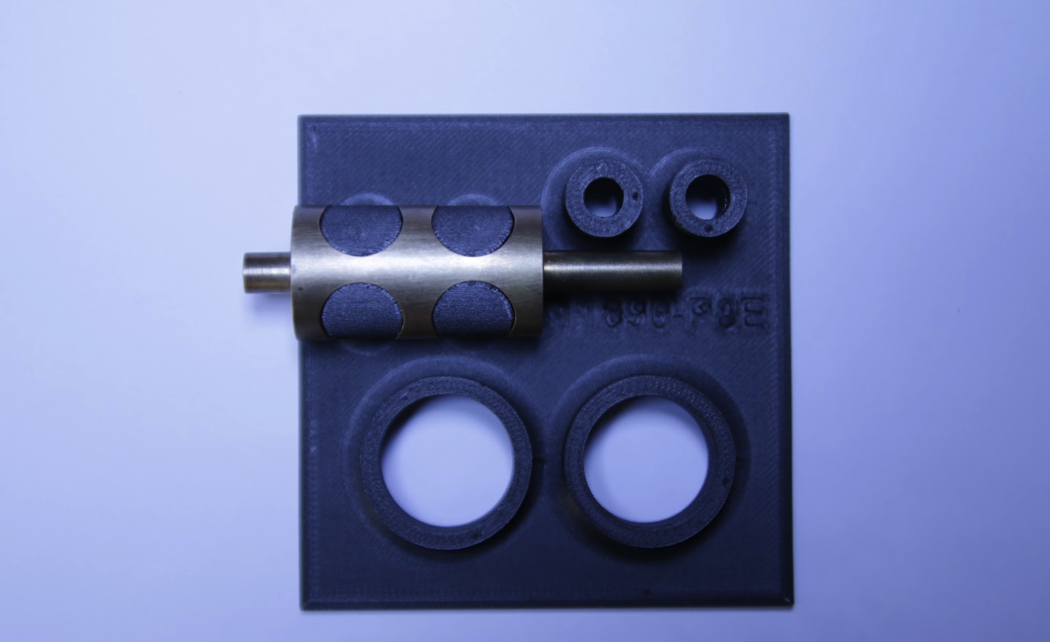
Why machining complex parts is hard
With 3-axis mills, complexity is already restricted by machine-specific limitations, such as the inability to perform undercuts. This renders certain geometries unproducible and forces you to constrain the complexity of your design to those restrictions.
After your part is designed for traditional manufacturing, it’s not ready to be fabricated quite yet. If a fixture is to be machined, it must be prepared in CAM beforehand. This process involves selecting which tools will be used to cut the stock and planning out the paths for each of those tools. Because more complex geometries often require a higher number of cutting operations, more intricate parts make for more work in CAM, and more skilled labor spent on fabricating the part. Alternatively, utilizing composite 3D printing to manufacture fixtures allows you to produce stiff, precise workholding while cutting out the expensive, time-consuming CAM process. Eiger, Markforged’s slicing software, takes care of all of the preparation; so all you have to do is design, then start the print. Higher geometric complexity can be printed with no extra effort, allowing for intricate, form-fitting fixtures to be produced at a lower cost.
To learn more about how composite 3D printed inspection fixtures help save time and money, watch the webinar. Or check out our case study on how JJ Churchill used Markforged printers to produce CMM fixturing 70% faster for 80% less cost.
Request a free sample part to test the strength of our materials!
모든 블로그와 블로그에 포함된 정보의 저작권은 마크포지드에 있으며, 당사의 서면 허가 없이 어떤 방식으로든 복사, 수정 또는 채택할 수 없습니다. 당사의 블로그에는 당사의 서비스 마크 또는 상표뿐만 아니라 계열사의 상표가 포함될 수 있습니다. 귀하가 당사의 블로그를 사용한다고 해서 당사의 사전 허가 없이 당사의 서비스 마크 또는 상표를 사용할 수 있는 권리나 라이선스가 부여되는 것은 아닙니다. 당사 블로그에서 제공되는 상표 정보는 전문적인 조언으로 간주되어서는 안 됩니다. 당사는 새로운 정보, 후속 이벤트 등을 바탕으로 블로그를 업데이트하거나 수정할 의무가 없습니다.
새로운 정보를 놓치지 마세요
Markforged의 최신 컨텐츠를 편지함으로 받으시려면 구독하십시오.